
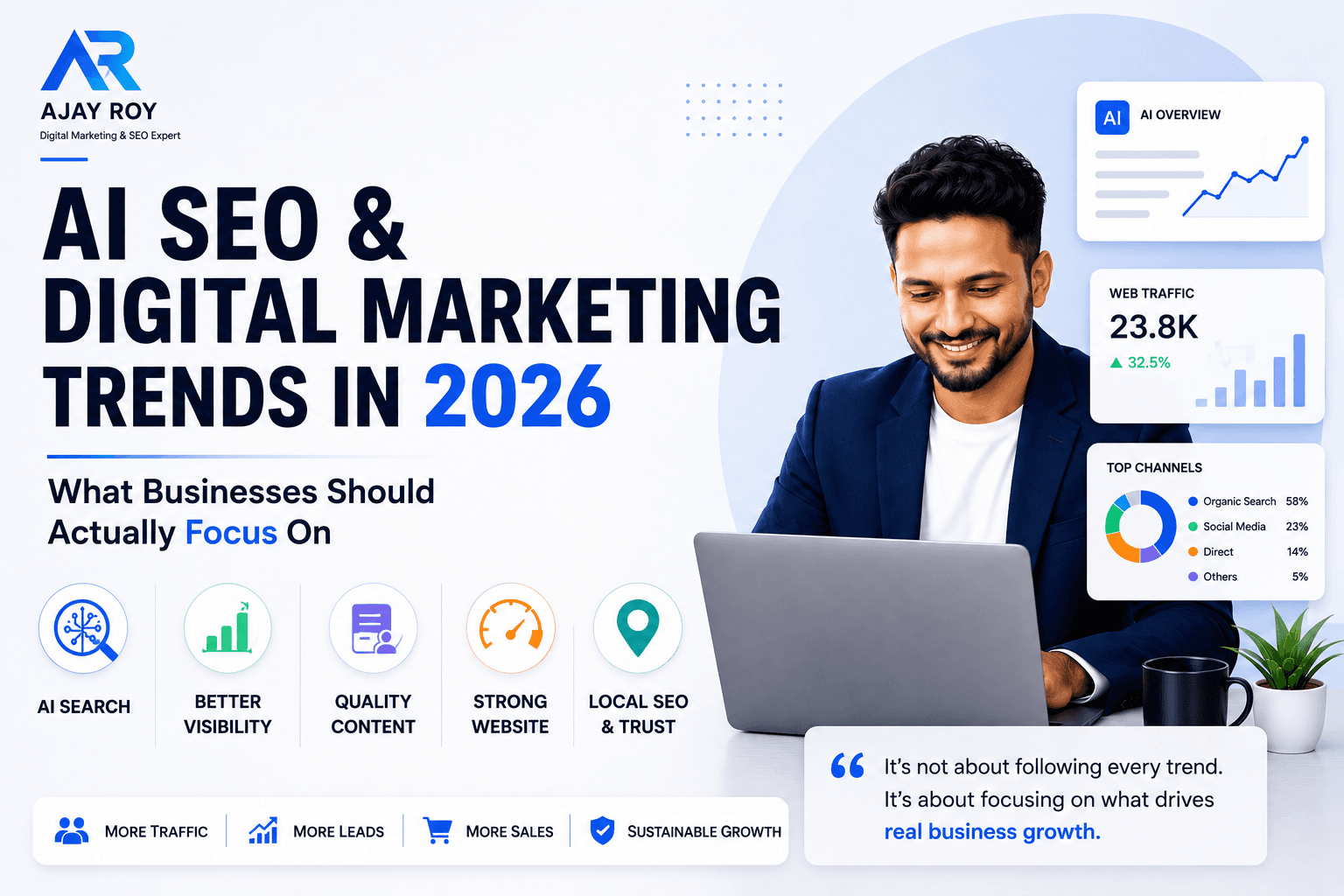
Digital marketing is moving fast, but not every trend deserves your attention.
Every year, people say SEO is changing completely. In some ways, that is true. AI tools are changing how people search. Social media platforms are becoming search engines. Customers are getting smarter, and Google is getting better at judging content quality.
But the basics have not disappeared.
People still want answers. Businesses still need trust. Websites still need to load fast. Content still needs to be useful. The difference in 2026 is that average content is no longer enough.
If your business wants to grow online, you do not need to chase every new tool or trend. You need to understand what is changing and focus on the areas that actually affect visibility, leads, and sales.
Here are the most important SEO and digital marketing trends businesses should pay attention to in 2026.
1. AI Search is Changing How People Discover Brands
A few years ago, most users searched on Google, opened a few websites, and compared the information themselves. Today, many people ask AI tools direct questions and expect quick answers.
They may ask:
“What is the best SEO strategy for a small business?”
“How can I improve my website traffic?”
“Which digital marketing agency should I choose?”
This shift matters because AI tools do not show results in the same way traditional search engines do. They summarize information, compare options, and often recommend what seems most reliable.
For businesses, this means content should be written clearly and practically. A blog should not just be filled with keywords. It should answer real questions in a way that feels helpful to the reader.
The goal is simple: write content that a person would actually find useful.
2. SEO is No Longer Only About Google Rankings
Ranking on Google is still important, but it is not the whole game anymore.
People now search on YouTube, Instagram, TikTok, Reddit, Quora, Google Maps, and AI platforms. Before buying a product or service, they may watch a short video, read reviews, check social media, and then visit the website.
This means your brand needs to appear in more than one place.
For example, a business that publishes blogs but ignores social media may miss a large part of its audience. Similarly, a business that only posts on Instagram but has no optimized website may lose customers who search on Google.
A strong digital presence in 2026 means your website, social media, Google Business Profile, reviews, and content all work together.
3. Human Experience Makes Content More Valuable
AI has made content creation faster, but it has also made the internet full of similar-looking articles.
You have probably seen blogs that sound polished but say nothing new. They use big words, repeat common points, and feel like they were written for search engines rather than people.
That is exactly what businesses should avoid.
Good content in 2026 needs a human touch. It should include real examples, honest opinions, practical advice, and industry experience.
For example, instead of writing, “Website speed is important for SEO,” explain what actually happens when a slow website loses visitors. Talk about how users behave. Mention what business owners usually overlook. Share something useful from real work.
That is what makes content feel real.
4. Short-Form Video is Becoming a Serious Marketing Tool
Short-form videos are no longer just for entertainment. They are now one of the easiest ways for businesses to get attention.
A customer may not read a full blog immediately, but they might watch a 30-second video explaining one useful tip.
This is why platforms like Instagram Reels, TikTok, YouTube Shorts, and Facebook Reels are becoming important for digital marketing.
The best part is that one blog can become many pieces of content. A blog about SEO tips can be turned into short videos such as:
“3 mistakes that stop your website from ranking”
“Why your website is getting traffic but no leads”
“How to improve your Google Business Profile”
This helps you reach people who prefer quick content while still building authority through long-form blogs.
5. Search Intent Matters More Than Keyword Repetition
Keywords are still useful, but repeating them again and again does not work like before.
Google and users both care more about intent.
Intent simply means the reason behind a search.
Someone searching “what is SEO” is probably learning. Someone searching “best SEO expert in Nepal” may be ready to hire. Someone searching “SEO pricing” is likely comparing options.
Each person needs different content.
That is why businesses should stop writing random blogs and start planning content based on the customer journey. Some content should educate. Some should compare. Some should help people make a decision.
When your content matches what the user actually needs, it performs much better.
6. Website Experience Can Affect Both SEO and Sales
Many businesses spend money on ads and content but forget about the website experience.
That is a big mistake.
A slow, confusing, or poorly designed website can waste all your marketing effort. Even if people visit your site, they may leave within seconds if they cannot find what they need.
In 2026, a good website should be fast, mobile-friendly, easy to navigate, and clear about what action the visitor should take.
Your website should answer these questions quickly:
Who are you?
What do you offer?
Why should someone trust you?
How can they contact you?
If visitors have to struggle to understand your business, they will probably move to a competitor.
7. Local SEO is Becoming More Competitive
For local businesses, SEO is more important than ever.
People often search with location-based intent. They look for services near them, compare ratings, read reviews, and check business profiles before contacting anyone.
This is especially true for restaurants, clinics, agencies, training institutes, consultancies, repair services, and local stores.
A well-optimized Google Business Profile can bring real leads. But simply creating the profile is not enough. Businesses need updated information, proper categories, good photos, regular posts, and genuine reviews.
Local SEO is not complicated, but it requires consistency.
8. Personal Branding Builds Trust Faster
People like working with people they trust.
That is why personal branding has become a powerful part of digital marketing. Founders, freelancers, consultants, developers, designers, and marketers who share their knowledge online often attract better opportunities.
Personal branding does not mean showing off. It means sharing what you know, what you are learning, and how you solve problems.
For example, a digital marketer can share campaign lessons, SEO tips, client results, common mistakes, or behind-the-scenes work. Over time, this builds trust.
When people repeatedly see your useful content, they remember you when they need your service.
9. Data Helps You Stop Guessing
Digital marketing without tracking is just guesswork.
Many businesses say their marketing is not working, but they do not know why. The problem could be poor targeting, weak content, slow website speed, low-quality traffic, or a confusing landing page.
Data helps you find the real issue.
Tools like Google Analytics, Google Search Console, Meta Ads Manager, and heatmaps can show what people are doing on your website and where they are dropping off.
This does not mean every business needs complicated reports. Even basic tracking can help you make better decisions.
The more you understand your data, the easier it becomes to improve your results.
10. Consistency Still Wins
With all the new trends, one thing has not changed: consistency matters.
Many businesses start SEO or content marketing with excitement and stop after a few weeks because they do not see quick results. But digital growth takes time.
A strong online presence is built through regular content, continuous website improvement, better customer communication, and ongoing optimization.
One good blog will not change everything. One viral video will not build a business forever. One ad campaign will not solve all lead problems.
The brands that win are usually the ones that keep improving when others stop.
Final Thoughts
SEO and digital marketing in 2026 are becoming smarter, more competitive, and more human at the same time.
AI is changing search, but it is not replacing trust. Social media is growing, but websites are still important. Keywords still matter, but useful content matters more.
For businesses, the best approach is not to follow every trend blindly. Focus on what creates real value.
Create content that answers real questions. Improve your website experience. Build your brand across multiple platforms. Track your results. Stay consistent.
Digital marketing is not just about getting attention anymore. It is about earning trust and turning that trust into long-term growth.